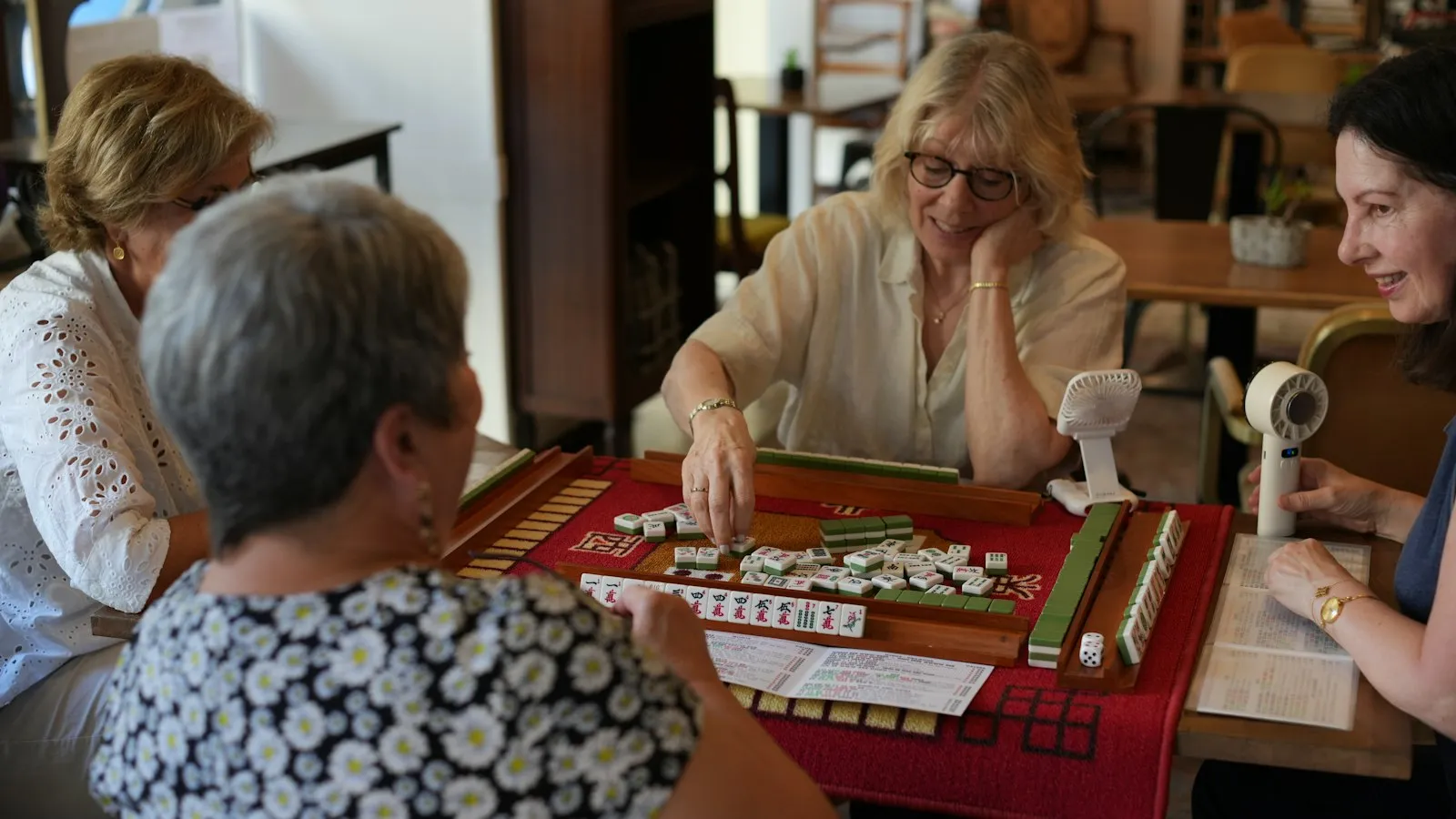
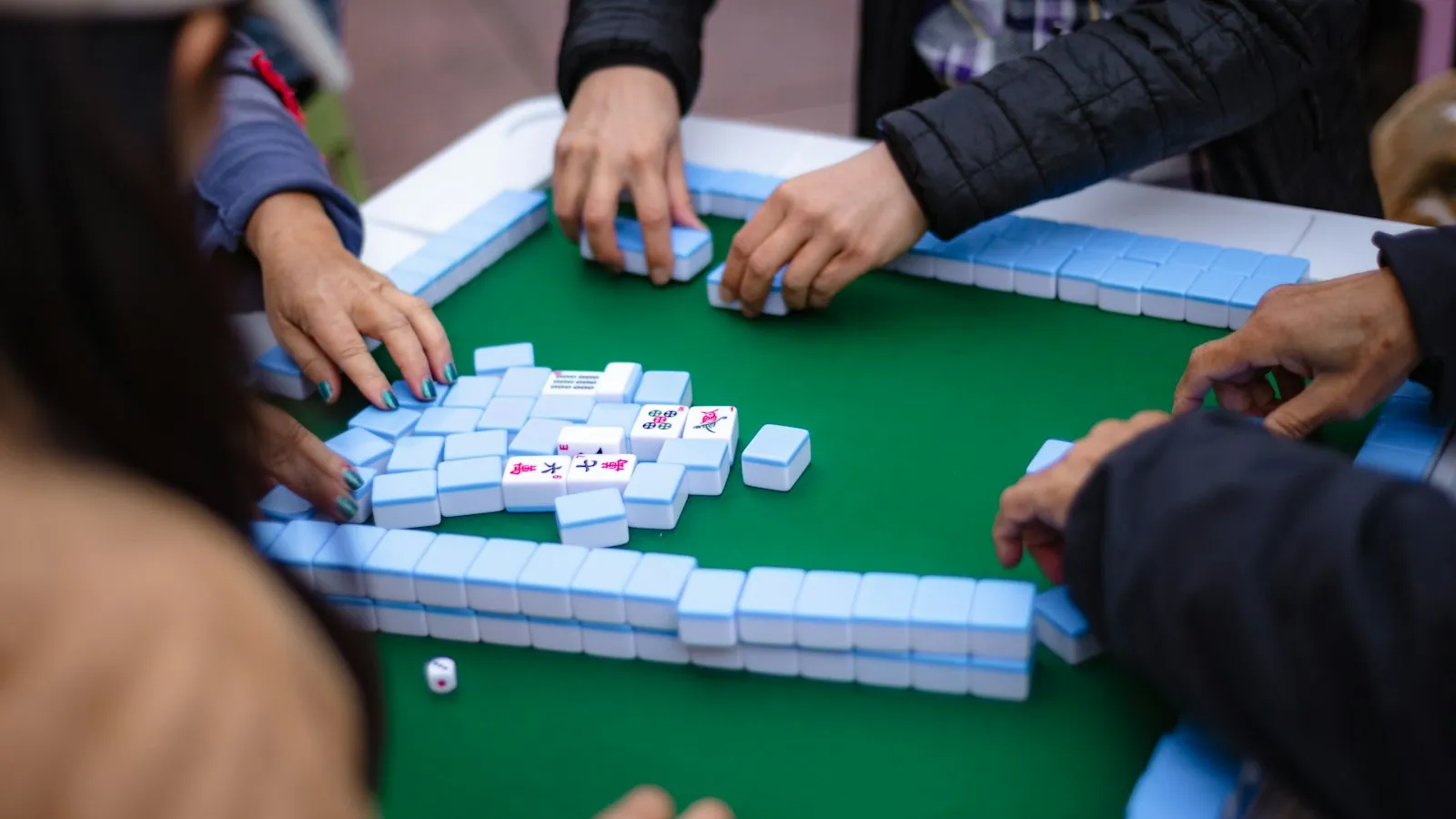
How to play
American vs Chinese vs Riichi mahjong: which should you learn?
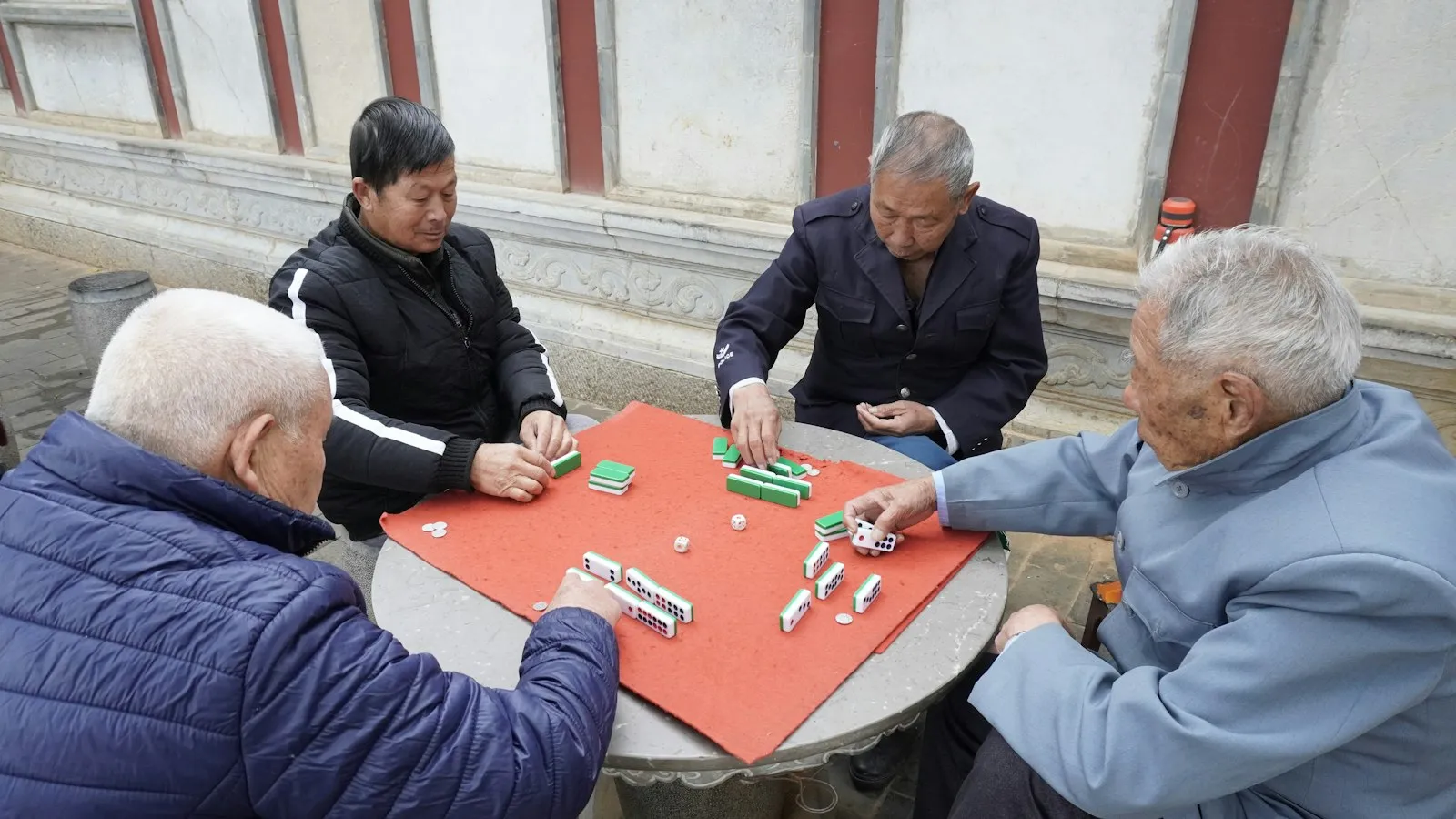
American vs Chinese mahjong is the first question most new players ask, and Riichi (the Japanese version) turns it into a three-way choice. There are many types of mahjong: related tile games that share a look and a lot of vocabulary. Before you buy a set or sign up for a class, it helps to know which version you are walking into.
Short answer: learn the version your friends play. If you have no group yet, the table below shows which one fits you.
From the team: We love mahjong and teaching it, and we do not think one version is the right one. The best version to learn is the one you will actually get to play, so start with who you will be playing with.
Where these games come from
Mahjong began in China in the 19th century. Japan, the United States and other countries then adapted it, which is why the versions differ. American mahjong grew out of the game that was imported to the US in the 1920s, and the National Mah Jongg League formalized American rules in the 1930s. Each version below keeps something of that history.
The core split: a yearly card or no card
The biggest difference is the card. In American mahjong you can only win with a hand printed on that year’s card from the National Mah Jongg League, and a new card is released every year. Chinese, Hong Kong and Riichi mahjong have no card. You build a hand from general patterns, and a scoring system decides what it is worth.
American vs Chinese mahjong (and Riichi) at a glance
| American | Hong Kong / Chinese | Riichi (Japanese) | |
|---|---|---|---|
| Players | 4 | 4 | 4 (3-player version exists) |
| Tiles | 152 (8 flowers and 8 jokers) | 144 (with 8 bonus tiles: flowers and seasons); some tables use 136, with none | 136 (no flowers) |
| Hand shape | Must match a hand on the annual card | 4 sets and a pair, and the hand must score a minimum (commonly 3 faan in Hong Kong style, 8 points in Chinese Official) | 4 sets and a pair, with at least one scoring pattern (“yaku”) |
| Jokers | Yes, 8 | No | No |
| Sequences (chows) | No chows. Runs appear only inside certain card hands, and a discard cannot be called for a run except to complete mahjong | Allowed | Allowed |
| Special steps | The Charleston (tile passing) | Flexible house rules; scoring varies by table | Declare “riichi,” bonus tiles (dora) |
| Scoring | Value printed on the card | Points from hand patterns (fan or faan) | Detailed points system |
| Best for | Social groups in the US, and anyone who likes a card-driven puzzle | Players who want a no-card game with flexible house rules | Strategy fans and online players |
Tile counts and special rules differ by group. Treat the table as a guide, not a rulebook. For a closer look at the tiles themselves, see American mahjong tiles explained.
American mahjong
What makes it different: a new card every year, jokers, and the Charleston. The card is reissued every spring, typically around April.
Why people like it: it is social and puzzle-like. You do not need to learn a big scoring system, because the card tells you what each hand is worth.
How common is it? One 2026 directory of US mahjong clubs (Bam Good Time, a commercial directory with 1,336 clubs) collected 519 listings from other directories and read their descriptions for a variant. Of those 519, 43 mentioned American mahjong, 4 mentioned Riichi and 2 mentioned Hong Kong (one club names more than one); the other 471 named no variant. The directories it drew from mostly index American groups, and the variant comes from free-text descriptions, so treat the numbers as a hint, not a census.
What to expect as a beginner: a card to buy each year, and a learning curve around the Charleston and jokers. Start with how to play American mahjong and the Charleston guide.
Hong Kong and Chinese mahjong
What makes it different: no card. You build a hand of four sets (a set can be a sequence, three of a kind or four of a kind) and one pair. A hand usually needs a minimum score to win, and the minimum differs by rules. Many Hong Kong tables use 3 faan (the scoring points in this style). Chinese Official rules, a competitive standard for tournaments, require 8 points. Different regions and families have their own scoring rules.
Why people like it: many beginners start with Hong Kong style because the basic sets-and-pair shape is the same across most versions, and many players find it quick to learn. Details such as scoring vary, so agree on them before you play.
What to expect as a beginner: the rules you learn at one table can differ from the next, so agree on the minimum score and the scoring before you start.
Riichi mahjong
What makes it different: a Japanese version with a deep strategy layer. You must have at least one scoring pattern (a “yaku”) to win. When you are one tile from winning with a closed hand, you can declare “riichi” and bet for a bigger payoff. Bonus tiles (“dora”) add random upside.
Why people like it: it is a thinking game, with a strong competitive scene and many online communities.
What to expect as a beginner: the most to learn up front, especially scoring and defense.
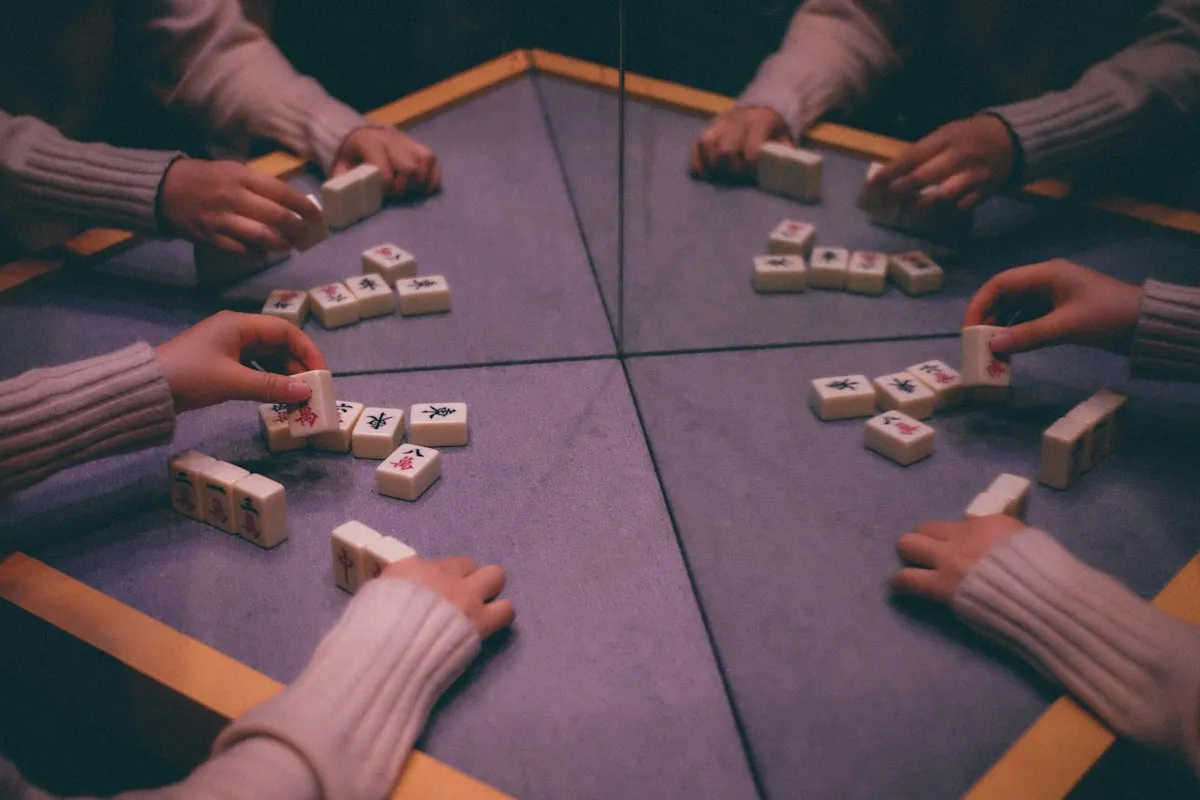 Photo by
Other versions you may meet
Taiwanese mahjong (hands of 16 tiles), Singapore and Malaysian styles, Filipino styles, and many family variations exist. If you are invited to a game, ask the host which rules they use. Do not be surprised if “mahjong” means something slightly different at every table.
Is mahjong solitaire the same game?
No. “Mahjong solitaire” uses tiles from the same set but is a different game: you match pairs and clear a board. It is not the four-player game described here.
How to choose
- My friends or a local group play American: learn American. Start with how to play American mahjong.
- My family plays and I want to join: ask which version, then follow its rules.
- I want a deep, competitive game online: try Riichi.
- I want something with no yearly purchase: try Hong Kong.
- I am not sure: American mahjong is the version most often named in that directory’s listings, and it is usually the easiest to find a teacher for. Learn it first and branch out later if you like.
Whichever you pick, buy a set that matches the game. American sets need jokers; Riichi sets do not.
The bottom line
The names look similar, but the games are distinct. Pick the one your table plays, learn its basics, and be patient with house rules. Many players end up learning more than one.
Sources
Rules summaries follow the League’s published guidance as quoted by these sources. For official American rulings, see the League’s Mah Jongg Made Easy booklet.
- Mahjong. Wikipedia overview of variants and history. https://en.wikipedia.org/wiki/Mahjong
- American mahjong. Wikipedia. https://en.wikipedia.org/wiki/American_mahjong
- The Order of the Tile, American mahjong rules by ID (an independent rules reference built on the League’s rulebook; see S-3, S-4, C-1, K-1). https://orderofthetile.com/rules/
- Japanese mahjong (Riichi). Wikipedia. https://en.wikipedia.org/wiki/Japanese_mahjong
- Riichi rules. UK Riichi Mahjong Association. https://riichi.uk/
- Hong Kong mahjong scoring rules (3 faan minimum is common). Wikipedia. https://en.wikipedia.org/wiki/Hong_Kong_mahjong_scoring_rules
- Mahjong Competition Rules (Chinese Official), English translation: a winning hand must be worth at least 8 points, not counting bonus tiles. Copy hosted by the Wereldmuseum Amsterdam. https://amsterdam.wereldmuseum.nl/sites/default/files/2026-09/Play%20-%20Mahjong%20Competition%20Rules%20EN.pdf
- Mahjong tiles. Wikipedia (tile counts). https://en.wikipedia.org/wiki/Mahjong_tiles
- Taiwanese 16-tile mahjong. Four Winds Rule Collection. https://4windsmj.com/kb/rules/taiwanese/rules00.htm
- The State of American Mahjong 2026 (Fall 2026 edition; 519 listings collected from other directories, out of 1,336 clubs; a commercial directory with its own stated limitations). Bam Good Time. https://bamgoodtime.com/blog/state-of-american-mahjong-2026
- National Mah Jongg League. https://www.nationalmahjonggleague.org/