How to play
The mahjong Charleston explained, step by step
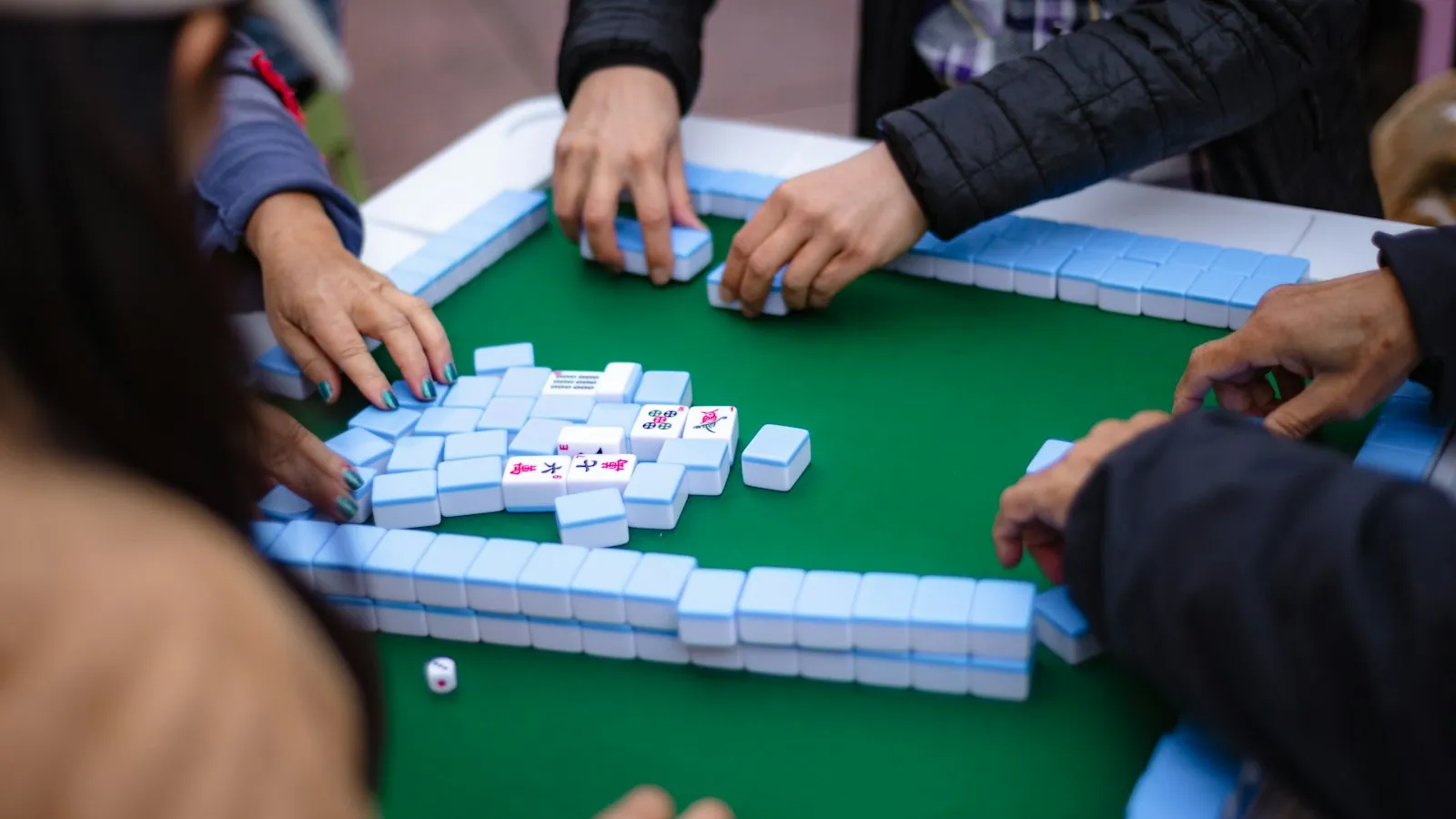
The mahjong Charleston is the first stage of play after the deal in American mahjong, and it is the part that makes new players nervous. It is a structured way to trade tiles before the game begins. It feels like a lot the first time, and the order becomes familiar after a game or two.
From the team: We love mahjong and teaching it, and the Charleston is the step that makes new players most nervous. We laid it out one pass at a time. Take it slowly; nobody expects a first-timer to pass perfectly.
Rules vary: Home tables often play with slightly different house rules. For official American rulings, see the National Mah Jongg League’s Mah Jongg Made Easy booklet, and ask your group which rules it uses.
What the Charleston is
In the standard four-player game, before anyone takes a regular turn, all four players pass tiles to one another in a fixed pattern. The goal is to get rid of tiles you do not need and pick up ones that suit the hand you are heading toward. Two- and three-player games skip the Charleston entirely.
Many people say the name comes from the Charleston dance, because of the back-and-forth movement. The exact origin is not certain, so treat that as a popular story.
The basics: what you pass
- Each pass is three tiles, passed face down.
- On a normal pass, choose your three tiles before you look at the three arriving.
- Jokers can never be passed. If one is passed by mistake it is handed back and you owe another tile.
- Passing flowers is allowed. Whether it helps your hand is a strategy question.
Mahjong Charleston rules: the order of the passes
Here is the whole Charleston on one table. Use it as a cheat sheet.
| Pass | Direction | Required? | Blind pass allowed? |
|---|---|---|---|
| 1 (first Charleston) | Right | Yes | No |
| 2 (first Charleston) | Across | Yes | No |
| 3 (first Charleston) | Left | Yes | Yes |
| Pause: any one player may stop the Charleston here | |||
| 4 (second Charleston) | Left | Only if nobody stopped it | No |
| 5 (second Charleston) | Across | Only if nobody stopped it | No |
| 6 (second Charleston) | Right | Only if nobody stopped it | Yes |
| Courtesy pass | Across | Optional | No |
The first Charleston (required)
- Pass right. Everyone passes three tiles to the player on their right.
- Pass across. Everyone passes three to the player opposite.
- Pass left. Everyone passes three to the player on their left.
All four players do the first Charleston. The only exception is the rare case where East is dealt a complete winning hand, which East can declare at once.
The second Charleston (optional)
After the first Charleston, any single player can stop the Charleston without giving a reason. They have to say so before anyone looks at the tiles that arrive on the first pass of the second Charleston. If nobody stops it, the second Charleston goes ahead, and once it has started you must finish all three passes.
The order reverses:
- Pass left.
- Pass across.
- Pass right.
Most tables ask out loud whether anyone wants to stop before moving on. Declining is a perfectly normal choice.
The courtesy pass
After the last Charleston (the first one if it was stopped, otherwise the second), you and the player across from you may swap 0, 1, 2 or 3 tiles. Agree on a number. The player who wants to pass fewer tiles sets the number, and if either of you wants none, nobody passes. Jokers can never be passed here either.
After that, East starts play by discarding the first tile.
The blind pass
On the third pass of each Charleston, you may “pass blind.” That is the left pass in the first Charleston and the right pass in the second. Instead of choosing all three tiles from your rack, you pass one, two or all three of the tiles coming to you straight on, without looking at them. You still pass three tiles in total, and you fill the rest from your own rack.
This is useful when you cannot spare any tiles. The League’s own materials call the move “stealing.” It is part of the official Charleston, so you do not need permission. Saying “passing blind” out loud is a courtesy, not a requirement, and more than one player can pass blind on the same pass. If several of you want to, the table sorts out the order together.
The blind pass belongs to the third pass of each Charleston, so you cannot use it on the first two passes or on the courtesy pass.
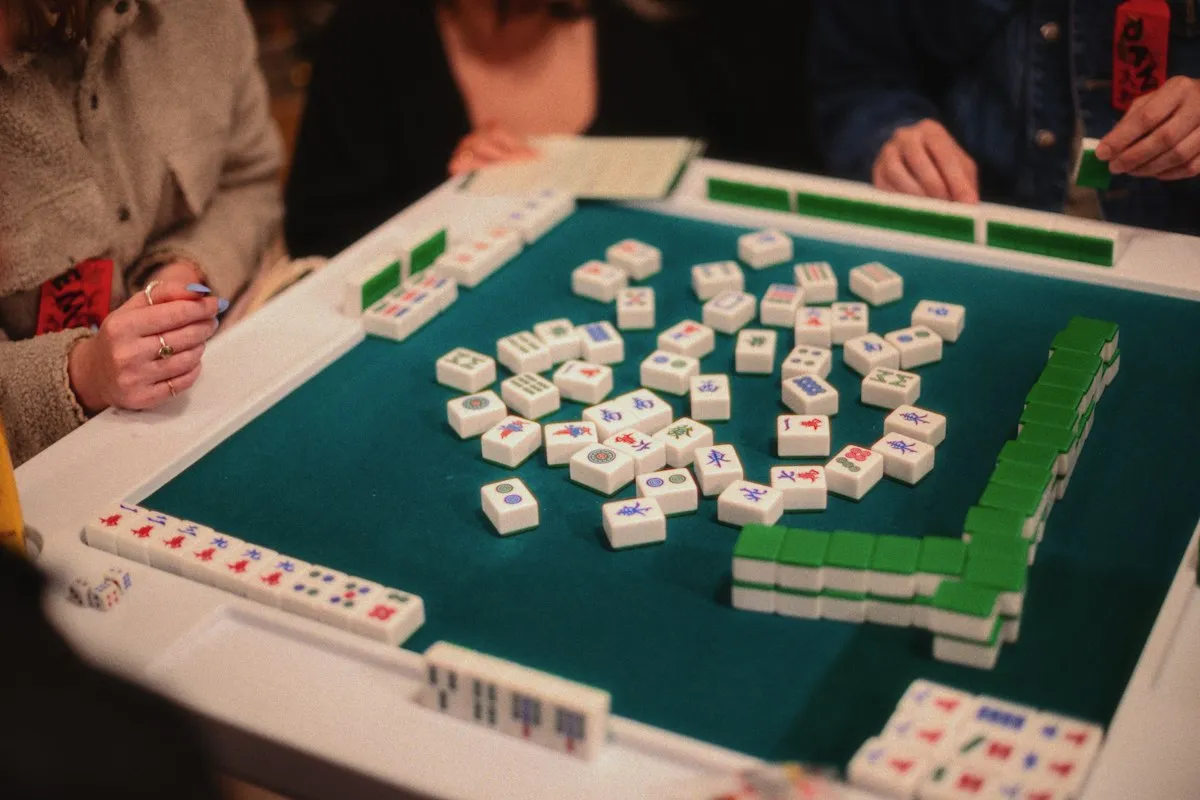 Photo by Jason Leung on Unsplash
Simple strategy for beginners
You do not need to know the whole card to pass sensibly. This is general advice, not a rule.
- Pass tiles that stand alone. Single tiles with no friends in your hand are good candidates.
- Keep pairs and groups. Two or three of a kind are the building blocks of hands, and passing them can help another player.
- Keep jokers. You cannot pass them anyway, and they help many hands.
- Do not decide on a hand in the first pass. Let the tiles come to you.
- Stay quiet. Most tables prefer that nobody talks about their hand during the Charleston.
For general guidance on picking a target after the Charleston, see how to play American mahjong.
Common mistakes
- Passing the wrong number of tiles. Always pass exactly three (except in the courtesy pass). A wrong count during the Charleston usually means the hands are thrown in and the deal starts again.
- Looking at tiles you are receiving. On a normal pass, choose your three before you look at the three arriving. On a blind pass, you pass the incoming tiles on without looking at them.
- Rushing. Slow down: it is better to be right than quick.
- Passing jokers. Not allowed.
- Skipping the question about a second Charleston. Ask before you start passing again, and remember that one player can stop it.
A practice routine
You can learn the Charleston at home with a friend or even on your own:
- Deal 13 tiles to each position (and 14 to East).
- Walk through the passes aloud: “right, across, left.”
- Repeat several times until the order feels automatic.
Mahjong Charleston FAQ
Is the Charleston required?
The first Charleston is required in a standard four-player game. The second one is optional, and any one player can stop it. The only exception to the first is when East is dealt a complete winning hand. Two- and three-player versions skip the Charleston entirely.
Do you have to do the second Charleston?
No. Any single player can stop it after the first Charleston, with no reason needed, as long as they say so before anyone looks at the tiles from its first pass. Once it has started, you finish it.
Can you pass jokers?
No. A joker can never be passed in any Charleston pass, including the courtesy pass.
How many tiles do you pass?
Three on each of the six main passes. On the courtesy pass it is 0, 1, 2 or 3, agreed with the player across from you.
Can I look at my tiles before passing?
Yes. You choose which three to pass from your own rack. You pass them before you look at the three tiles coming to you.
Do all groups do it the same way?
Mostly, but there are small differences. Always ask a new group about its house rules.
Next steps
- Review how to play American mahjong for the full flow of a game.
- See what each tile is, including jokers and flowers, in American mahjong tiles explained.
Sources
Rules summaries follow the League’s published guidance as quoted by these sources. The League’s Mah Jongg Made Easy booklet is the authority, and this article has not yet been checked against the current edition. For official rulings, see that booklet.
- National Mah Jongg League. https://www.nationalmahjonggleague.org/
- The Charleston. The Complete American Mah Jongg Rulebook, American Mah Jongg Association (third party, not the League). https://guide.americanmahjonggassociation.com/how-to-play-american-mah-jongg/the-charleston/
- Passing blind during the Charleston (Article 128). Mahj Life wiki, quoting Mah Jongg Made Easy (2024, pp. 12 to 13) and League Q&A. https://mahjlife.com/wiki/passing-blind-in-the-charleston-article-128/
- Charleston underway and must be completed (Article 193). Mahj Life wiki, quoting a League bulletin. https://mahjlife.com/wiki/charleston-underway-and-must-be-completed-article-193/
- The Order of the Tile, American mahjong rules by ID (an independent rules reference built on the League’s rulebook; see CH-1 to CH-9, J-2). https://orderofthetile.com/rules/
- American mahjong. Wikipedia. https://en.wikipedia.org/wiki/American_mahjong